Ever noticed how some teams just click? Everyone steps up, supports each other, and gets things done, while others struggle with finger-pointing and dropped balls. The difference often comes down to shared responsibility: when multiple team members feel accountable for collective success, not just their own to-do list.
This guide combines proven strategies with hands-on activities you can implement today, whether your team is in Melbourne, Perth, Sydney, or working remotely across the country. You’ll find practical frameworks, step-by-step processes, and examples of how Australian organisations can foster a culture of team collaboration that drives organisational and business success.
Shared responsibility means everyone on your team is invested in collective success — not just completing their assigned tasks. It’s the difference between “that’s not my job” and “how can I help?” When collaborative teamwork is part of your culture, team members naturally support one another, communicate openly, and celebrate wins together, fostering a positive team culture.
Teams that collaborate consistently outperform those where everyone works in silos. Here’s why implementing practical strategies for team collaboration drives results:
Improved productivity and innovation: When team members feel collectively responsible for outcomes, they share ideas freely, challenge concepts constructively, and find more creative solutions together. Instead of hoarding information or waiting for permission, they take initiative because they’re invested in the team’s success. This creative thinking and willingness to encourage knowledge sharing lead to innovative solutions that drive organisational success.
Stronger relationships and trust: Collaborative efforts create natural opportunities for connection. Team members learn each other’s unique skills and different skills, develop mutual respect, and build the kind of trust that can’t be forced through corporate mandates. These relationships become the foundation for handling challenges together and achieving success as cohesive teams.
Higher retention and engagement: Australian workplace research consistently shows that employees stay longer and perform better when they feel part of something bigger than their individual role. Fostering collaboration gives team members a sense of ownership and belonging that directly impacts retention rates and keeps employees motivated.
Better outcomes for hybrid and remote teams: Team collaboration is even more critical. When team members across Brisbane, Perth, Sydney (or working from home) all feel accountable to each other, distance becomes less of a barrier. Open communication and mutual support replace the casual conversations that happen naturally in offices, creating seamless collaboration.
Building effective teamwork isn’t about hoping your team “gets it” — it requires structure. These proven frameworks provide a roadmap for creating accountability and lasting, successful collaboration, helping team leaders systematically foster collaboration.
This framework covers the essential elements of shared responsibility. We’ve used it with teams across every industry, from healthcare to technology, with consistently strong results.
In practice: Start team meetings by revisiting your shared objectives. Use a team agreement template to outline who’s responsible for what — not to micromanage, but to eliminate confusion. This keeps everyone on the same page and working toward shared goals.
In practice: Involve the team in goal-setting rather than handing down objectives from leadership. When people help shape the destination, they’re naturally more committed to reaching it. Our LEGO® Serious Play® workshops excel at building this kind of collective commitment through hands-on collaboration, creating a creative environment where everyone contributes.
In practice: Establish regular check-ins where team members share progress, roadblocks, and requests for help. Use tools like Slack or Teams for quick questions, but prioritise face-to-face conversations (virtual or in-person) for complex discussions. Communication breaks down when people fear judgment, so create a sense of psychological safety first. This internal communication strategy helps enhance collaboration.
In practice: Design work that requires diverse perspectives. Our Battle of the Minds challenge demonstrates this beautifully; teams tackle 45 diverse tasks where success depends on analytical thinkers, creative problem-solvers, and strategic planners, all contributing their strengths. No one can excel at everything, which naturally fosters appreciation for collaboration and helps group members gain valuable insights from one another.
In practice, this isn’t about punishment; it’s about accountability. When someone drops the ball, how does the team respond? With blame or with problem-solving? Establish norms early: “If you’re struggling, speak up. If someone needs help, we step in. We win together and learn together.” Celebrate collective wins, not just individual achievements, and create a positive work environment.
The 7 Cs framework adds three elements, creating an even more comprehensive approach. Use this for larger teams, cross-functional teams, or when you need deeper cultural transformation.
The additional Cs:
Use the 5 Cs when:
Use the 7 Cs when:
Not sure which framework fits your situation? Our facilitators can assess your team’s needs, recommend the best approach, and help you implement it through tailored team-building experiences that strengthen your team.
Ready to boost collaboration in your team? Follow these steps, and don’t worry if progress feels slow at first — cultural change takes time, but the investment pays off in organisational success.
Start by defining what success looks like for your team. Vague goals like “improve collaboration” don’t provide concrete targets for people to work toward. Instead, try “complete the Q4 product launch with all departments meeting their milestones and proactively supporting each other through challenges.”
Action: Hold a team workshop to co-create goals. When team members help define objectives, they’re more invested in achieving them. Document these shared goals in a location everyone can access, whether that’s a shared drive, team room, or digital workspace. This keeps everyone on the same page.
Effective teamwork doesn’t mean everyone does everything. Clear roles prevent duplicated effort and ensure nothing falls through the cracks.
Action: Create a responsibility map showing who owns what, who supports whom, and where collaboration is essential. Update this as projects evolve. The key is transparency; everyone should know whom to contact for different needs, enabling seamless collaboration.
Team agreements are your social contract: how you’ll work together, communicate, handle conflict, and support each other. These shouldn’t gather dust in a folder — they’re living documents you reference regularly to maintain a supportive team culture.
Action: Facilitate a session where the team agrees on norms like:
Our facilitators often help teams create these agreements during wellbeing team-building programs, where psychological safety and open communication are central themes.
Collective work needs visibility. When everyone can see progress, roadblocks, and commitments, accountability happens naturally in your team environment.
Action: Use simple tools like:
When everyone can see what’s happening, accountability becomes natural and cross-functional teamwork improves. But remember, the tool matters less than the habit. Pick something your team will actually use to enhance teamwork and strengthen collaboration.
Check-ins aren’t status updates — they’re opportunities to course-correct, offer support, and strengthen relationships. Make them safe spaces where people can be honest about struggles, encouraging open communication that helps improve collaborative teamwork.
Action: Schedule weekly team check-ins (even 15 minutes works) where you ask:
For distributed teams, video calls are non-negotiable. Chat and email can’t replace seeing faces and reading tone when you’re trying to foster collaboration.
Here’s where Beyond the Boardroom’s expertise makes a real difference. You can talk about team collaboration all day, but experiencing it together creates lasting change and helps group members gain valuable insights.
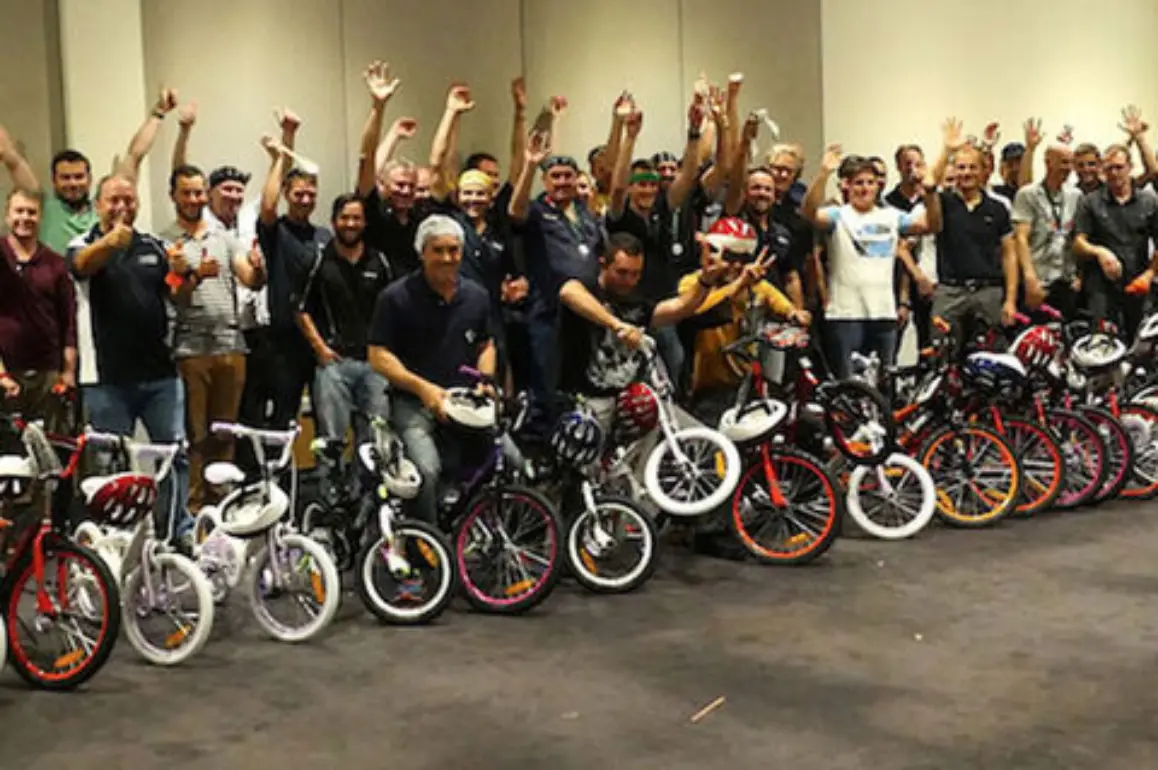
Our charity programs, such as Bike Brigade, are particularly effective here. Teams build bicycles for underprivileged children, requiring coordination, communication, and collective problem-solving. When they see the tangible result of working together — bikes going to kids who need them — collaborative teamwork stops being an abstract concept.
For teams needing creative problem-solving, our LEGO® Serious Play® workshops create scenarios in which success depends on everyone contributing ideas and building on one another’s concepts. You can’t dominate or check out — team cohesion is built into the experience, creating space for innovation and fresh ideas.
For remote and hybrid teams, our Virtual Escape Rooms (Art Heist and Arctic Survival) force distributed team members to communicate clearly, share information, and solve problems together. Physical distance doesn’t matter when you’ve worked together to crack the final code and escape.
Building a collaborative culture is easier with expert guidance. Since 2005, we’ve helped thousands of Australian teams across every industry develop cultures of collaboration and accountability. Here’s how we support your journey toward organisational success:
Our facilitators do more than run activities — they connect experiences to your workplace dynamics. We tie challenges back to real situations your team faces, helping translate fun into lasting behaviour change that improves teamwork and drives project success.
We come to you, whether that’s your Melbourne office, a Perth beach, a Sydney conference centre, or virtually across Australia. No need to coordinate transport or unfamiliar venues. We handle logistics so you can focus on your team and fostering collaboration.
Every team is different. We tailor our programs to your specific challenges, goals, and culture. Whether you’re integrating new team members, breaking down departmental silos, or reinvigorating a burnt-out team, we design experiences that address your needs and naturally build collaborative habits.
We work with intimate groups of 8 and company-wide events of 300+. Our programs scale beautifully while maintaining the personal connection that drives results, helping teams unite regardless of size.
Our signature approach ensures that every activity engages participants, connects to meaningful outcomes, and appropriately stretches teams. Collaborative teamwork develops naturally when teams experience these elements together in a creative environment.
When everyone feels accountable for collective success, teams communicate better, solve problems faster, and actually enjoy working together. Lasting change comes from meaningful experiences that bring concepts to life in a supportive team environment and encourage collaboration.
If you’re wondering how long it takes to build effective teamwork and team collaboration, contact us today.

At Beyond the Boardroom, we believe strong teams aren’t built by chance, they’re built through shared purpose, meaningful connection, and the courage to Go Beyond the ordinary.